

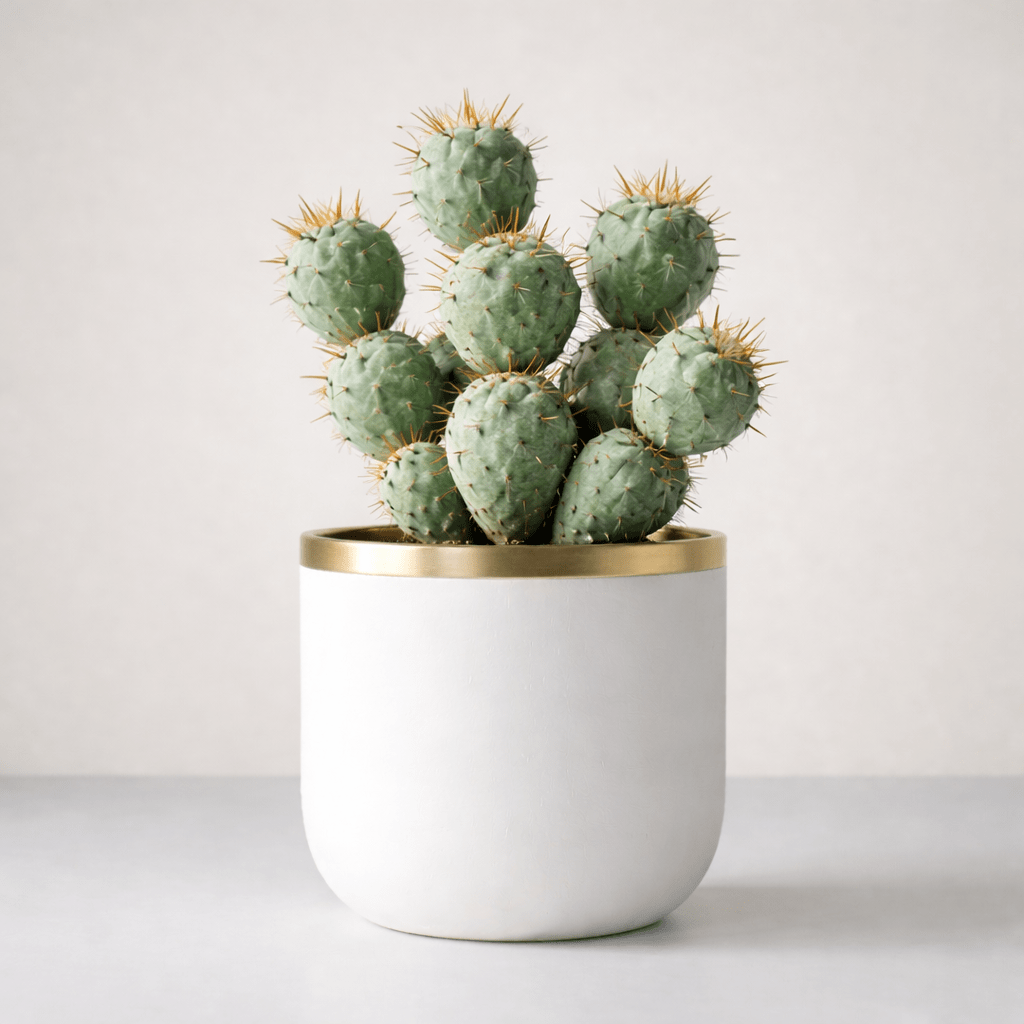
Tephtocactus Plant
₹349
In StockView & Listen Plant Education

Tephtocactus Plant - Video Guide
Watch Video
All Details
A unique and sculptural genus of cactus, known for its segmented, ball-like or cylindrical stems that appear to be stacked on top of each other like a pile of stones or pinecones. It is a slow-growing, highly geometric plant prized by collectors for its unusual form and pronounced spines or glochids.
I am a small, clumping cactus composed of round, oval, or cylindrical stem segments (called cladodes) that detach very easily.
My most distinctive feature is my segmented, geometric growth habit. My segments can be smooth, tubercled, or heavily armed with long, papery spines or dense clusters of tiny, barbed glochids.
New segments grow from the top of older ones, creating a stacked, sculptural appearance. I may produce white, yellow, or pink flowers from the tops of my segments.
I am also known as the "Paper Spine Cactus" for some species with distinctive flat, papery spines.
I am native to the high-altitude, arid regions of the Andes Mountains in Argentina and Peru.
I am a highly drought-tolerant desert cactus. My water needs are minimal.
Use the "soak and dry" method thoroughly. Water deeply only when the soil is completely dry for an extended period.
In winter, I need almost no water (perhaps one light watering). I am extremely prone to rot if watered during cold, damp conditions.
Perfect drainage and a porous potting mix are non-negotiable.
I am a full sun enthusiast. I require maximum sunlight—at least 6-8 hours of direct, unfiltered sun daily—to maintain a compact, healthy shape and to flower.
I can tolerate very bright, indirect light, but insufficient sun will cause etiolation (stretched, weak growth) and poor spine development.
I am ideal for a south-facing window or a sunny, dry spot outdoors in summer.
I thrive in warm, dry climates with cool nights and am best suited to USDA zones 9-11 if grown outdoors.
My ideal growing range is 18°C to 30°C during the day, with a significant drop at night.
I am surprisingly cold-hardy for a cactus due to my high-altitude origins and can tolerate brief periods down to -5°C if kept perfectly dry. A cool, dry winter rest is essential.
I am a collector's specimen plant, best showcased in a shallow, wide pot that mimics my spreading, clumping habit.
Plant me in an extremely well-draining, mineral-based mix (e.g., 70% pumice, perlite, or coarse sand mixed with 30% cactus soil).
Handle with extreme care using thick gloves and tongs. My segments detach easily (a natural propagation method), and my spines or glochids are notoriously painful and difficult to remove from skin.
I propagate effortlessly by simply placing a detached segment on dry soil; it will root on its own.
I am an exceptionally light feeder. Fertilizing is rarely necessary.
If desired, apply a diluted, low-nitrogen cactus fertilizer once in early spring at most.
Over-fertilizing will cause weak, unnatural growth.
Scientific Name: Tephrocactus spp. (e.g., T. geometricus, T. alexanderi, T. articulatus)
Common Names: Paper Spine Cactus, Pinecone Cactus, Roller Cactus
Plant Family: Cactaceae
Plant Type: Perennial succulent cactus
While not chemically toxic, I am extremely dangerous to pets. My barbed spines and glochids can cause severe oral and internal injury, pain, and infection if a pet attempts to bite or ingest me. The physical risk far outweighs any chemical toxicity.
Negligible. I am a small, slow-growing cactus grown exclusively for its unique ornamental and sculptural form.
Provides an unparalleled, geometric, "living stone" sculptural quality.
Extremely drought-tolerant and low-maintenance for experienced growers.
Fascinating to observe as it grows new segments.
Flowers are a beautiful bonus on mature, well-cared-for plants.
Rot (Segments become mushy/black): Caused by overwatering, especially in cool weather or without adequate drainage.
Etiolation (Stretched, thin segments): Caused by insufficient sunlight.
Pests: Can be susceptible to mealybugs and scale, which hide at the base of spines or between segments.
Physical Damage: Segments break off easily, which is part of my natural propagation but can be messy.
I am a very slow-growing, long-lived cactus. A plant can thrive for decades. I grow by adding new segments, slowly forming a low, spreading clump. The growth rate is measured in segments per year. My longevity is a testament to patience, and a well-grown specimen becomes a prized collection centerpiece.
Everyday: from 9:00AM to 7:00PM

H-1202, Sheladia Eris, Shela, Ahmedabad - 382465