

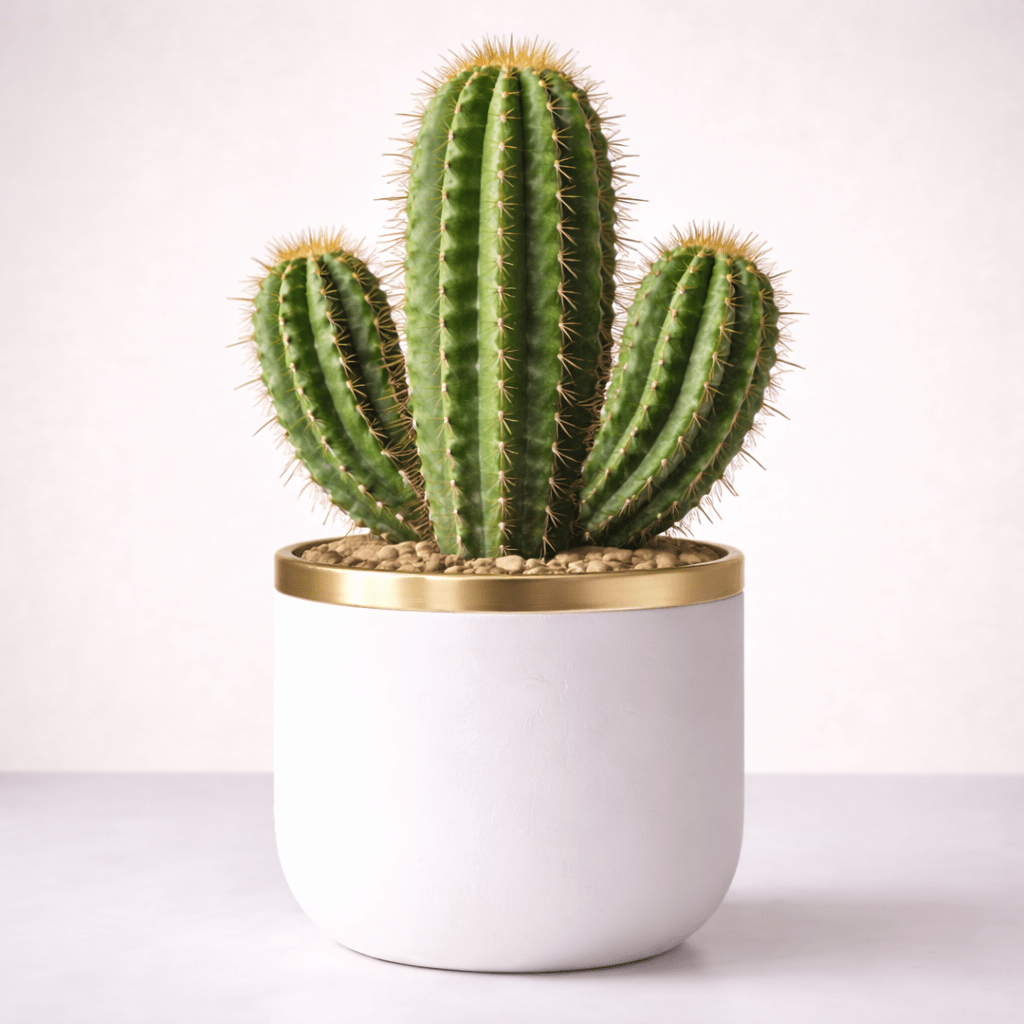
Saguaro Cactus Plant
₹499
In StockView & Listen Plant Education

Saguaro Cactus Plant - Video Guide
Watch Video
All Details
An iconic symbol of the American Southwest, the Saguaro is a giant, tree-like columnar cactus that defines the Sonoran Desert landscape. It is known for its immense size, slow growth, majestic arms, and crucial role in its desert ecosystem.
I am the largest cactus in the United States, a slow-growing, branching columnar cactus.
My most iconic feature is my tall, ribbed, green trunk and the characteristic arms that curve upward, which I begin to develop after 50-75 years of age.
My skin is covered in a waxy coating to reduce water loss, and my 2-inch spines cluster in groups on my ridges.
In late spring, I produce large, white, night-blooming flowers that open after sunset and close by midday. These become edible red fruits.
I am native exclusively to the Sonoran Desert in Arizona, the Mexican state of Sonora, and small areas of southeastern California.
I am a master of drought survival. My pleated trunk expands to store hundreds of gallons of water after rare rains.
In cultivation, I require infrequent but deep watering. Soak the soil completely, then allow it to dry out entirely for weeks or months.
Overwatering is fatal. I am extremely prone to root rot. In winter, I need almost no water.
I require perfect, fast-draining soil and cannot tolerate any standing moisture.
I am a full sun desert giant. I require maximum, unobstructed sunlight all day long.
I cannot thrive in shade or even partial shade. Insufficient sun leads to etiolation (weak, skinny growth) and eventual death.
I am built for the most intense, direct desert sunlight.
I thrive in extreme, dry heat and am suited only to USDA zones 8b-11.
My ideal range is hot days (above 32°C) and cool nights. I can survive brief freezing temperatures down to -4°C if perfectly dry, but sustained frost or wet cold is lethal.
I am a landscape monument for large properties in desert regions only. I am not a houseplant.
Planting must be done with extreme care. Even small specimens are heavy. Always hire a professional to move or plant large Saguaros.
Soil must be native, rocky, sandy desert soil with perfect drainage. Do not amend with rich organic matter.
I have a shallow, wide root system. Give me vast space—at least 3-4 meters from structures and other large plants.
I do not require fertilizer in native soil. In extremely poor, cultivated soil, a light application of a low-nitrogen, cactus-specific fertilizer once a year in spring is maximum.
More harm is done by over-fertilizing than by not fertilizing at all.
Scientific Name: Carnegiea gigantea
Common Names: Saguaro, Giant Cactus, Sage of the Desert
Plant Family: Cactaceae
Plant Type: Perennial, branching columnar cactus
My spines are a severe puncture and laceration risk to pets and people. While not chemically toxic, physical injury and infection are the primary dangers. Keep pets away.
As a massive, long-lived plant, I am a significant carbon sink, sequestering carbon dioxide over centuries. My contribution to local oxygen production is substantial but relevant only in my native desert landscape.
An iconic, awe-inspiring living sculpture that defines a landscape.
Provides critical habitat and food for desert wildlife (birds like Gila woodpeckers and elf owls nest in me; bats pollinate my flowers).
Culturally and spiritually significant to the Tohono O'odham Nation.
Extremely low-maintenance in the correct native environment.
Root & Basal Rot: The #1 killer, caused by any excess moisture, especially in cold weather.
Bacterial Necrosis: A disease causing black, oozing sores, often entering through damage or frost cracks.
Sunburn: Can occur on young plants or on sides suddenly exposed to intense sun, causing yellow or bleached patches.
Theft & Vandalism: Protected by law in Arizona; stealing or harming me is a felony.
Freeze Damage: Causes blackening, scarring, or death of limbs or the main trunk.
I am one of the longest-living plants on Earth. I grow extremely slowly (about 2.5 cm in the first 8 years). I can live for 150-200 years, with some giants estimated to be over 200 years old. I may not grow my first arm until I am 75 years old. My life is measured in human generations, and I am a true testament to patience and resilience.
Everyday: from 9:00AM to 7:00PM

H-1202, Sheladia Eris, Shela, Ahmedabad - 382465