

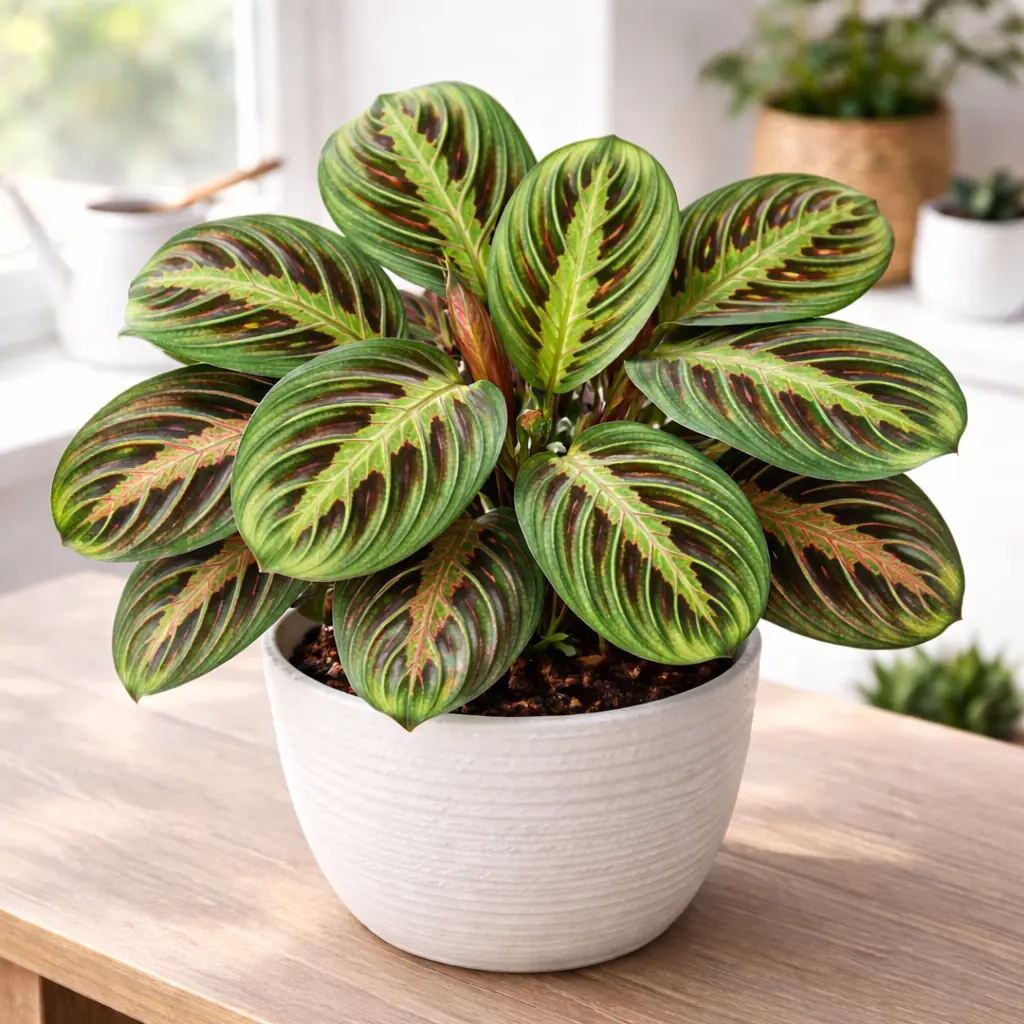
Prayer Plant
₹199
In StockView & Listen Plant Education
Prayer Plant - Video Guide
Watch Video
All Details
A captivating and popular houseplant, beloved for its strikingly patterned foliage and unique daily movement. Its leaves open flat during the day and rise vertically in the evening, as if in prayer, due to a circadian rhythm. It adds dynamic beauty and vibrant color to indoor spaces.
I am a low-growing, spreading perennial with a rhizomatous root system, forming lush clumps of ornamental leaves.
My most distinctive features are my oval, beautifully patterned leaves with vivid veins, splotches, or feathered patterns in shades of dark green, light green, cream, pink, and red. The leaf undersides are often a contrasting solid purple or maroon.
I exhibit nyctinasty—my leaves move in response to light changes. They lie flat during the day to catch light and fold upright at night, a process you can hear with faint rustling sounds.
I am part of the Marantaceae family, which includes other popular plants like Calathea and Stromanthe.
I am native to the tropical rainforests of Brazil.
I prefer consistently moist (but not soggy) soil. Use well-draining potting mix and water when the top inch feels dry.
I am sensitive to both drought (causes leaf curling and crisp edges) and overwatering (causes yellowing and root rot).
I have an absolute requirement for high humidity (60% or higher). Low humidity is the primary cause of brown, crispy leaf edges. A humidifier is the best solution; misting helps but is often insufficient.
Use filtered, distilled, or rainwater whenever possible. I am very sensitive to fluoride, chlorine, and salts in tap water, which cause leaf tip burn.
I thrive in medium to bright, indirect light. I am an understory plant and must be shielded from any direct sunlight, which will scorch, fade, or bleach my delicate leaves.
I can tolerate lower light conditions, but my growth will slow, and the vibrant leaf patterns may become less pronounced.
An east or north-facing window is ideal.
I am a true tropical plant and prefer consistently warm temperatures between 18°C and 27°C.
I am extremely sensitive to cold drafts, sudden temperature changes, and temperatures below 15°C.
I am grown almost exclusively as a houseplant (USDA zones 11-12 if outdoors in a protected, shaded spot).
I am a perfect tabletop or shelf plant where my foliage and movement can be admired up close.
Use a light, peaty, well-draining potting mix (an African violet mix works well).
Ensure the pot has drainage holes. I prefer to be slightly root-bound.
Wipe my leaves gently with a damp cloth to keep them dust-free and efficient at photosynthesis.
Feed me every 2-4 weeks during the growing season (spring and summer) with a balanced, diluted liquid fertilizer (half strength is safe).
Do not fertilize in fall and winter when growth slows.
Over-fertilizing will burn my roots and cause leaf tip burn.
Scientific Name: Maranta leuconeura (with popular cultivars like 'Erythroneura' [Red-Veined], 'Kerchoveana' [Rabbit's Tracks])
Common Names: Prayer Plant, Herringbone Plant, Ten Commandments
Plant Family: Marantaceae
Plant Type: Evergreen perennial herb
I am non-toxic to cats and dogs, making me a beautiful and safe choice for pet-friendly homes.
While not the most powerful, my foliage contributes to a healthier indoor environment by absorbing common VOCs and releasing oxygen. My high transpiration rate also helps humidify the air.
Provides breathtaking, year-round foliage with intricate patterns.
Safe for households with pets and children.
Adds a living, dynamic element to a room with its daily leaf movements.
Thrives in the lower-light conditions common in homes.
Excellent for terrariums or humidity cabinets.
Brown, Crispy Leaf Edges: The hallmark sign of low humidity or sensitivity to chemicals in tap water.
Leaf Curling: Typically a sign of underwatering or too much light.
Yellowing Leaves: Often a sign of overwatering.
Faded/Washed-Out Leaf Color: Caused by too much direct sunlight.
Spider Mites: My arch-nemesis, especially in dry indoor air. They cause stippling and webbing on the undersides of leaves. Increase humidity and inspect regularly.
Leaves Not Praying: Can be caused by insufficient light, but sometimes older plants simply move less.
I am a long-lived perennial houseplant with proper care. While I have a reputation for being somewhat fussy (mainly due to humidity demands), if kept happy, I can thrive for many years. I grow from a rhizome and can be divided during repotting in spring to propagate and rejuvenate the plant, ensuring its beauty continues indefinitely. Individual leaves last for several months to over a year.
Everyday: from 9:00AM to 7:00PM

H-1202, Sheladia Eris, Shela, Ahmedabad - 382465