

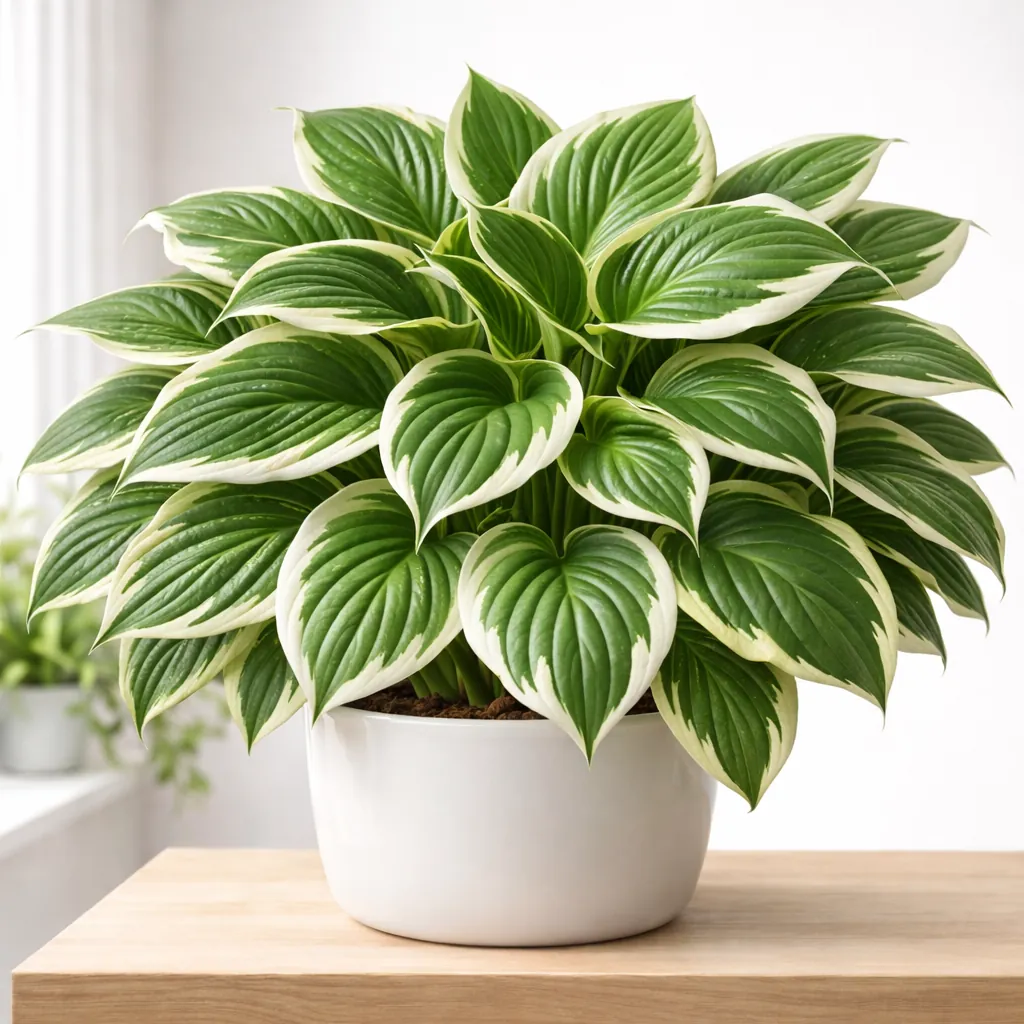
Hosta Plant
₹249
In StockView & Listen Plant Education

Hosta Plant - Video Guide
Watch Video
All Details
A beloved and versatile perennial, renowned for its stunning, textured foliage in a breathtaking array of colors, sizes, and shapes. It is the quintessential shade garden plant, forming lush, elegant clumps that provide reliable ground cover and visual interest from spring to fall.
I am a herbaceous perennial grown primarily for my magnificent, often large, foliage. I form symmetrical, mounded clumps from a central crown of rhizomes.
My leaves are my masterpiece—they can be heart-shaped, lance-like, or rounded, with textures ranging from smooth and glossy to deeply corrugated (seersuckered) and puckered. Colors include every shade of green, blue, gold, and white, often in dramatic variegated patterns.
In summer, I send up graceful, often fragrant, flower scapes bearing lily-like blooms in shades of white, lavender, or purple, which attract hummingbirds and bees.
I am also known as the "Plantain Lily."
I am native to Northeast Asia, primarily China, Japan, and Korea.
I prefer consistently moist, well-drained soil. I thrive with about 1 inch of water per week, more during hot, dry spells.
While I need regular moisture, I cannot tolerate "wet feet" or waterlogged soil, which leads to crown and root rot.
A deep, thorough watering is better than frequent, light sprinklings. Water at the base to keep foliage dry and prevent disease.
Once established, I have moderate drought tolerance, but leaf edges will scorch if I get too dry.
I am the empress of the shade garden. I thrive in partial to full shade.
The ideal light depends on my color: Gold and yellow varieties tolerate more sun (especially morning sun) to develop their brightest color, while blue varieties need more shade to preserve their waxy, blue coating.
Too much direct, hot afternoon sun will cause scorching (brown, crispy patches) on most varieties.
I am a hardy perennial, thriving in USDA zones 3-9.
I prefer cool to moderate temperatures and perform best when summers aren't excessively hot and dry.
My foliage emerges in spring, thrives through summer, and dies back completely after the first hard frost in autumn. I require a winter chilling period to regrow.
I am the backbone of shade gardens, woodland borders, and planted as a stunning edging or mass ground cover.
Plant me in rich, organic, well-draining soil amended with plenty of compost.
Dig a wide hole, as my roots spread horizontally. The crown (where roots meet stems) should be level with the soil surface.
I am excellent in containers but need ample soil volume and consistent watering.
I am a moderate to heavy feeder due to my large leaf production.
Apply a balanced, slow-release granular fertilizer or a top-dressing of compost in early spring as new shoots (eyes) emerge.
A light, balanced feeding again in midsummer can be beneficial for larger varieties.
Avoid high-nitrogen fertilizers late in the season.
Scientific Name: Hosta spp. (Thousands of cultivars exist)
Common Names: Hosta, Plantain Lily, Funkia
Plant Family: Asparagaceae
Plant Type: Herbaceous perennial
I am toxic to dogs, cats, and horses. All parts of the plant contain saponins. Ingestion can cause vomiting, diarrhea, and depression. While rarely fatal, it's best to plant me where pets cannot nibble.
While typically grown outdoors, my large, abundant leaves are effective at photosynthesis and transpiration, contributing to local oxygen production and cooling effects in the garden.
Provides unmatched foliage variety, texture, and color for shaded areas.
Extremely hardy, low-maintenance, and long-lived.
Excellent for suppressing weeds as a ground cover.
Flowers attract pollinators.
Deer-resistant (though not deer-proof—they are a favorite snack for deer in many areas).
Slugs and Snails: My #1 enemy. They chew unsightly holes in my leaves, especially in damp, shady conditions. Use organic or chemical controls diligently.
Hosta Virus X (HVX): A serious, incurable disease causing mottling, discoloration, and distorted growth. Purchase from reputable sources and destroy infected plants.
Leaf Scorch: Brown, crispy edges from too much sun, drought, or wind exposure.
Crown/Root Rot: Caused by poorly draining soil or fungal pathogens like Sclerotium or Phytophthora.
Deer and Rabbit Browsing: Animals can severely damage or defoliate plants.
I am an exceptionally long-lived perennial. Once established in a suitable spot, I can thrive and even expand for decades, often 30 years or more. My clump increases in size and beauty each year. I am truly an heirloom garden plant that can be divided every 3-5 years to propagate and rejuvenate. I die back to the ground each winter and re-emerge faithfully each spring.
Everyday: from 9:00AM to 7:00PM

H-1202, Sheladia Eris, Shela, Ahmedabad - 382465